Culture
Warli Art in Dahanu: Where to See It and How to Buy Real Pieces
Dahanu is core Warli country. Where to see Warli painting, how to buy direct from artists, what the symbols mean, and how to tell a hand-painted piece from a print.
5 min read
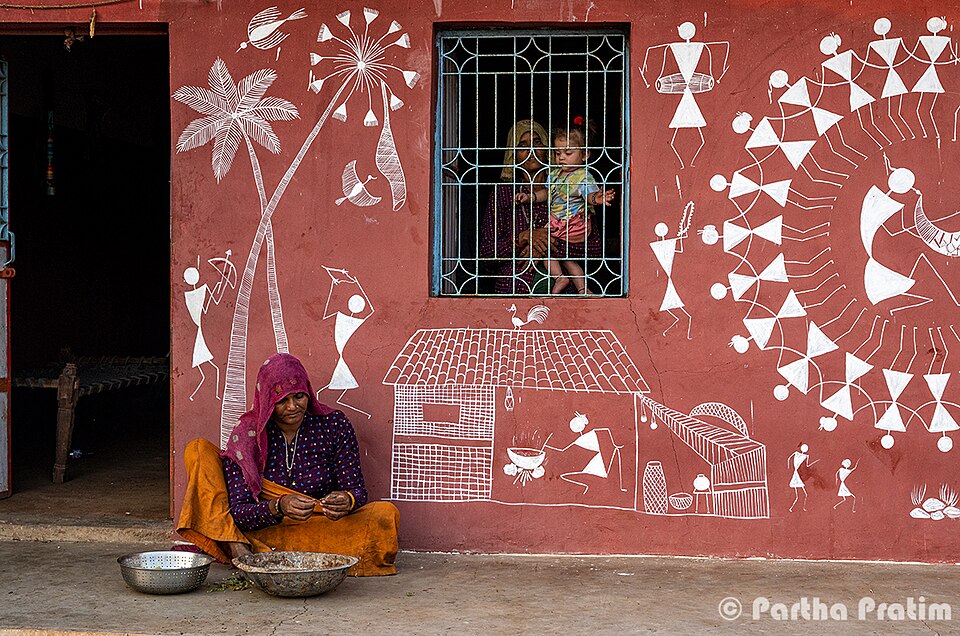
Warli painting is one of India's best-known folk traditions, and Dahanu taluka is one of its core homes. Palghar district's own administration identifies Warli painting and Tarpa culture as the region's major living traditions — this is where the art actually comes from, not somewhere it's sold.
The tradition also produced Jivya Soma Mashe, who received the Padma Shri for Warli painting and is largely responsible for the form being recognised as art rather than decoration.
If you're buying Warli anywhere in India, buying it here means buying it at the source.
The Vayeda Brothers
Warli isn't a museum piece here — it has living practitioners, and the best-known working today are Mayur and Tushar Vayeda, brothers from Ganjad, a village in this taluka.
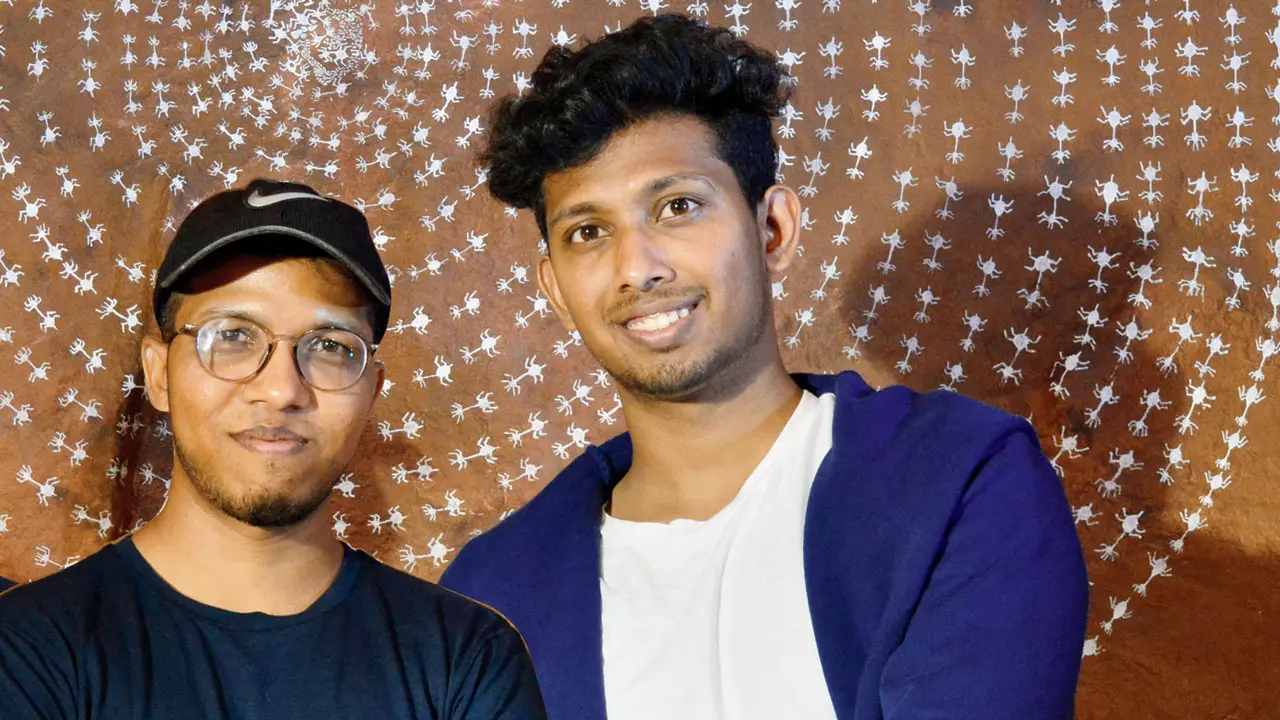
They learned the form from family as children, left to study other subjects in Mumbai, and came back to it as a profession around 2007–08. They've been at it for well over fifteen years since, and their work has travelled a long way from the village: exhibitions in India and abroad, and picture books published with Tara Books — Tail Tale (2019), Deep (2020) and more recently Seed.
What makes them worth knowing about isn't only the art. Their studio in Ganjad occupies what was once their grandfather Vasudeo Vayeda's community school, and it still functions partly as one — a workshop and learning space for younger artists in the community, including young women, who are the traditional creatives of the Warli world. The stated aim is to move the tradition forward without diluting it.
That balance shows in the method. They still work with the traditional materials — cow dung ground for the surface, rice paste for the white, bamboo sticks for brushes — while widening what the form can depict. As they put it, Warli has always been a living tradition that absorbs new motifs; they treat it that way rather than as something frozen.
If you want to own their work and can't get to a gallery, the Tara Books titles are the accessible route — they're properly printed, widely available, and a real piece of contemporary Warli rather than a souvenir reproduction.
Where to see it
- Villages and interiors around Dahanu and toward the Jawhar side, where the painting is part of the buildings rather than hung on a wall
- Cultural festivals — the Mahalaxmi yatra in particular, where Tarpa dancing and tribal participation are central
- Farm and community experiences — several agro-tourism places build it into a stay
- Workshops — Save Farm at Gholvad runs Warli art workshops, which is the most straightforward option if you want to try it yourself
A workshop is genuinely worth doing. Ten minutes of attempting the figures teaches you more about the form than an hour of looking.
How to buy the real thing
Buy artist-direct, or through a trusted community or co-operative source. Not from a generic souvenir shop.
Two reasons. The obvious one is authenticity. The better one is that buying direct means the money reaches the person who made it, which is the entire point of buying folk art at its source.
Telling hand-painted from printed
This is where people get cheated, and it's easy to check once you know what you're looking at.
Hand-painted:
- Lines have tiny irregularities — a human hand doesn't repeat perfectly
- Visible brush texture, and pigment that varies slightly in density
- No identical repeating motifs; each figure differs a little
- The backing material makes sense for a painted work
Printed:
- Lines and dots perfectly uniform
- Halftone or inkjet texture visible up close — look very closely at a dark area
- Identical motifs repeated exactly across the piece
Take a photo up close and zoom in if you're unsure. A print gives itself away immediately at magnification.
What it costs
Enormously variable — it depends on size, the artist's standing, and materials.
- Small, simple works: hundreds to low thousands of rupees
- Large or master-artist works: thousands to tens of thousands, and pieces by recognised contemporary artists can go well beyond that
Treat that as orientation rather than a price list. If you're buying something significant, it's worth understanding who made it.
Shipping is commonly possible when buying from established artists or sellers — confirm before you pay.
What the symbols mean
Warli painting is built from a very small vocabulary, which is part of why it reads so clearly:
| Symbol | Meaning |
|---|---|
| Circle | The sun and the moon |
| Triangle | Hills, trees, natural forms |
| Square | A sacred or enclosed space |
| Two triangles joined at the point | A human figure |
| Circular dance formations | Community and celebration — often around a Tarpa player |
Once you can read those, the paintings stop being decorative patterns and start being scenes — a harvest, a wedding, a hunt, a dance.
The Tarpa itself is a wind instrument, and the circling dance around the Tarpa player is one of the most common subjects you'll see. If you're here during the Mahalaxmi yatra, you can watch the thing the paintings depict.
Doing this respectfully
Warli villages are places people live, not exhibits. Ask before photographing homes, people, or painted walls. Don't enter ceremonies or sacred areas for a picture.
If you want a closer look at the culture, a farm stay or an organised workshop is the right route — the access is arranged and the community is being paid for its time.
More Dahanu guides
Culture
Dahanu's Festival Calendar: What Happens When
When Dahanu's festivals happen — the Mahalaxmi yatra, the Bordi Chikoo Festival, Dahanu Festival, Navratri and the village jatras — and which ones visitors can attend.
Beaches
Bordi or Dahanu Beach? An Honest Comparison
Which Dahanu beach to choose — Bordi is quieter and cleaner, Dahanu is easier to reach. Swimming safety, best times, parking, and what's actually available.
Food & Farming
Chikoo Season in Dahanu: When to Come, Where to Buy, What to Look For
Dahanu and Gholvad grow India's most famous chikoo — a GI-tagged fruit. When it's best, how to buy direct from the orchards, how to pick a good one, and when the Chikoo Festival happens.